Mont Blanc
Climbing Expedition Report
Mont
Blanc
Introduction: A Pinnacle Journey
On a crisp Saturday morning, the alarm echoed through the Italian Torino Hut (3,375m). Having recovered from our previous alpine expeditions in the valley the day before, we were ready for our ultimate challenge. This would bring our “Naar de Top” climb for Kika to a total of thireen 4,000-meter peaks. The centerpiece of the day’s plan was to conquer the Mont Blanc du Tacul (4,248m) via the Arête du Diable, a rocky route that links six 4,000-meter peaks. This journey would require technical climbing skills, abseils, and would culminate on the Mont Blanc du Tacul, a task taking 6 to 9 hours. Our adventure began at 2:30 AM.
An Uncertain Start and the Hunt for the Ridge
Leaving the hut, we expected to find the entry point of the route within 1.5 hours. However, the snow and ice markings that typically guided climbers to the starting point were absent. After some searching, we eventually located the unmarked entry. The base was littered with loose stones, some frequently tumbling down the slope. Nevertheless, we pressed onward, hoping for improved conditions on the ridge of rocky needles. Before we could reach the col du Diable (3,955m), we encountered insurmountable difficulties due to the absence of a snow and ice chute in the couloir.
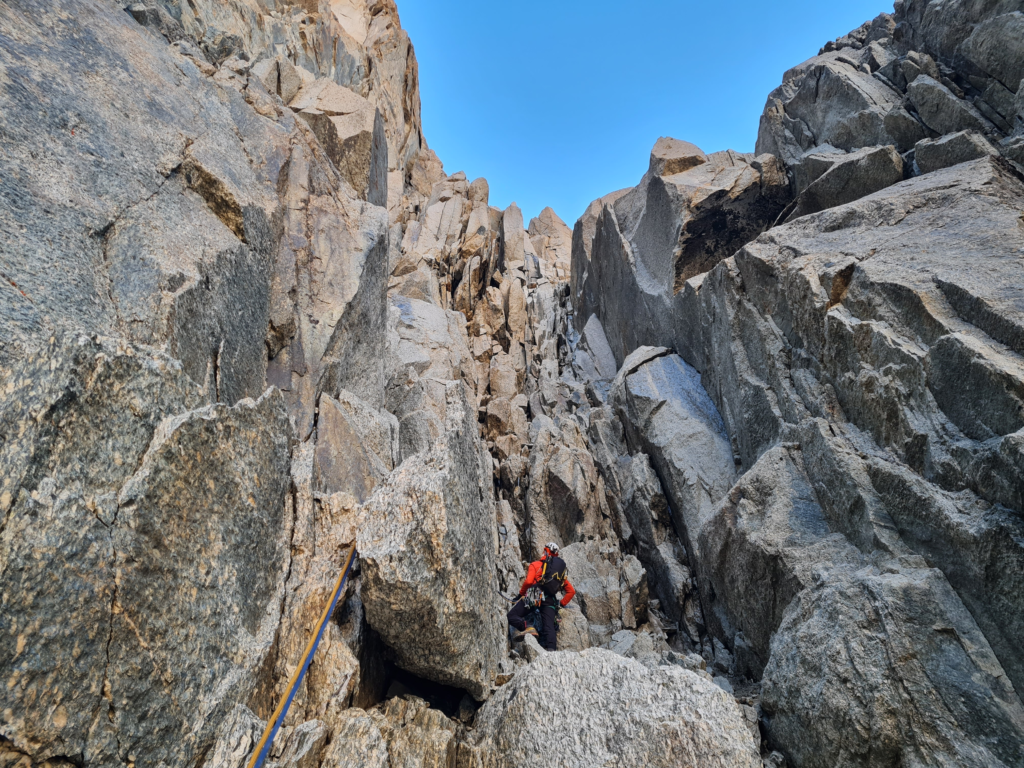
Refusing to turn back, we traversed through the face of the mountain until we found a relatively stable route upwards. Navigating past the last two rocky needles, we had to bypass the most challenging one, L’Isolée (4,114m, 5c), as the entry was too slippery for our liking, without visible anchor points for protection equipment. Once atop the ridge, the sun rose, revealing the perilous condition of the route, littered with loose stones, sand, and scree. However, the allure of the rocky needles beckoned.
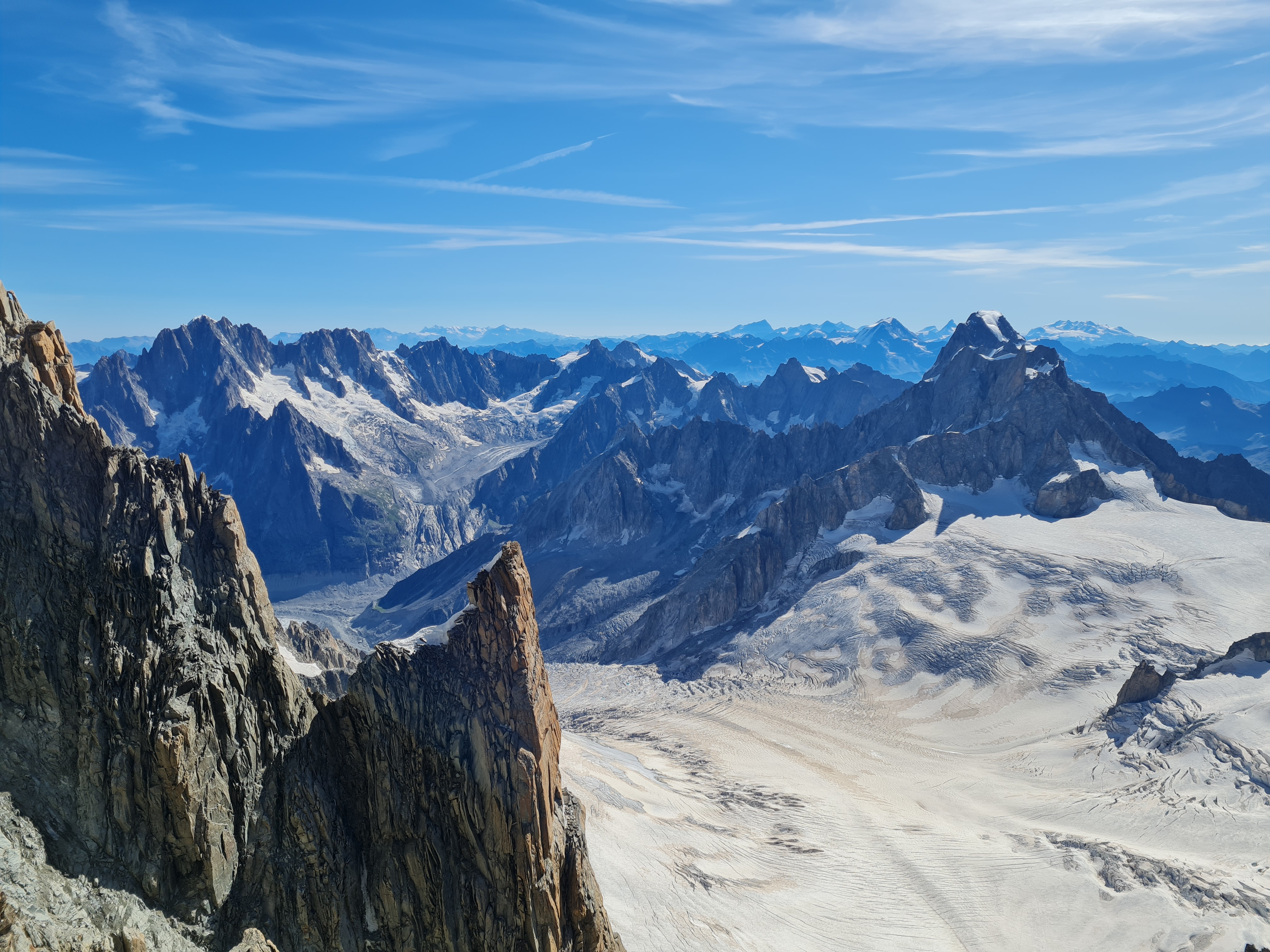
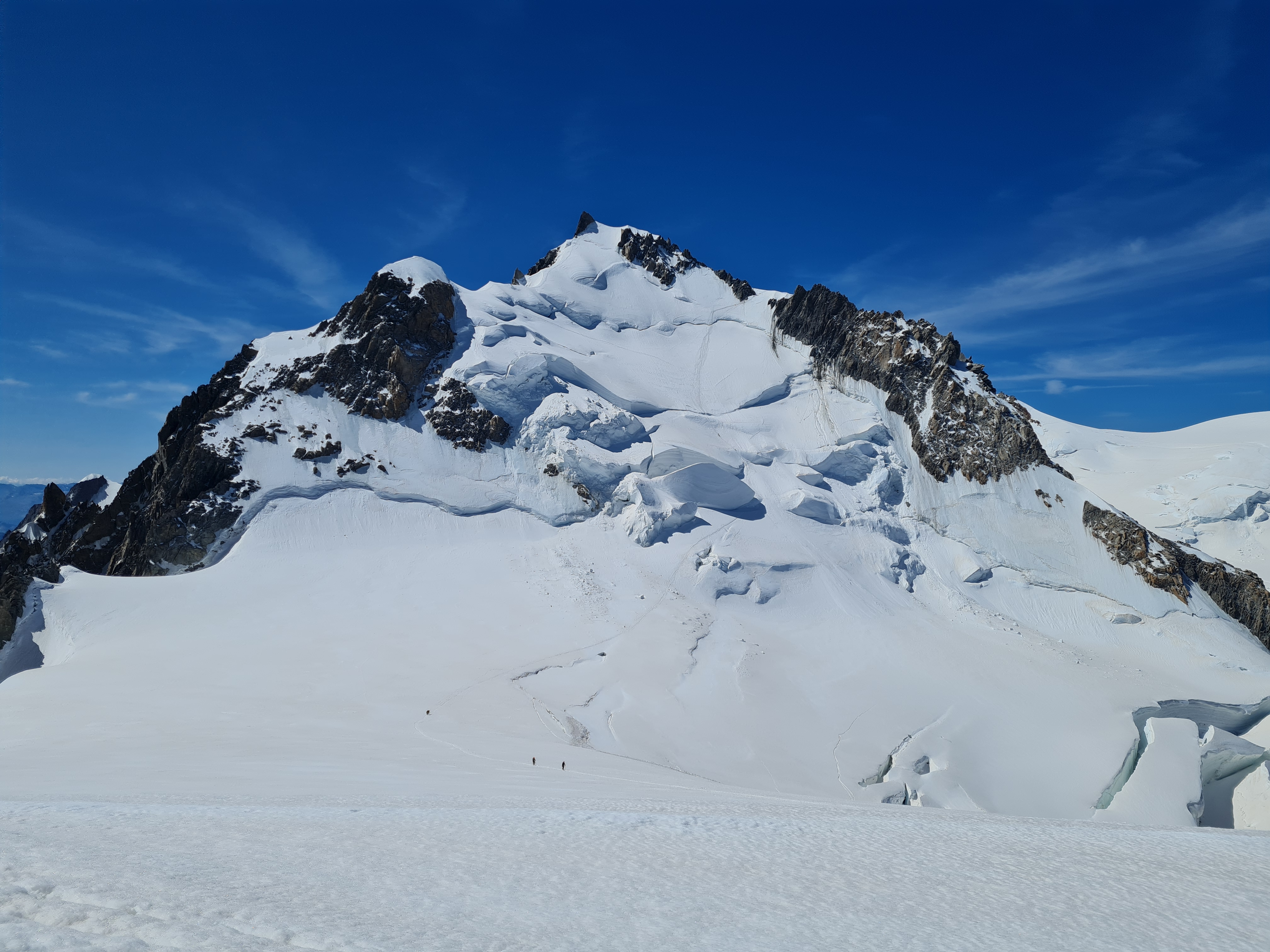
First, we had to reach the col du Diable, which was impossible without the expected snow and ice chute. We were faced with a difficult decision: should we turn back? Absolutely not; that wasn’t our style. We forged onward, ascending via a relatively stable section of rock. We left L’Isolée behind due to treacherous entry conditions, where we couldn’t find proper anchor points for climbing protection equipment. As we reached the ridge’s peak, the sun graced us with its warmth. We ascended the long rocky ridge to the Mont Blanc du Tacul, our first 4,000-meter peak of the day, offering an unparalleled panoramic view. This climb granted us breathtaking vistas, particularly along the razor-sharp ridge.
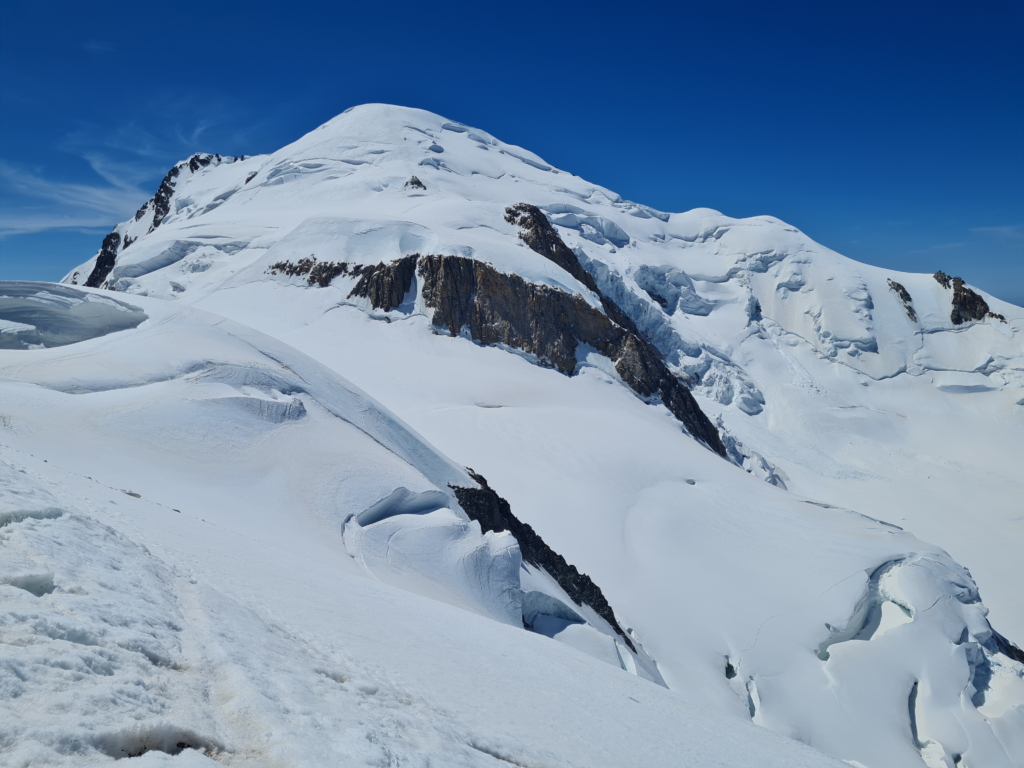
From the summit of the Mont Blanc du Tacul (4,248m), we spotted the distant Mont Blanc (4,807m), beckoning us with its silhouette 600 meters higher. It was 11:00 AM, and we had spent 8.5 hours climbing. Bart and I exchanged glances, and a broad smile crept across our faces. The thought of reaching the Mont Blanc, a promise made to Bart’s sponsors, inspired us. Conditions were ideal, so why not? The only risks were the arduous, drawn-out descent through mushy snow and uncertainty about our return to the hut. Plus, we had minimal provisions – just one liter of water and four energy bars.
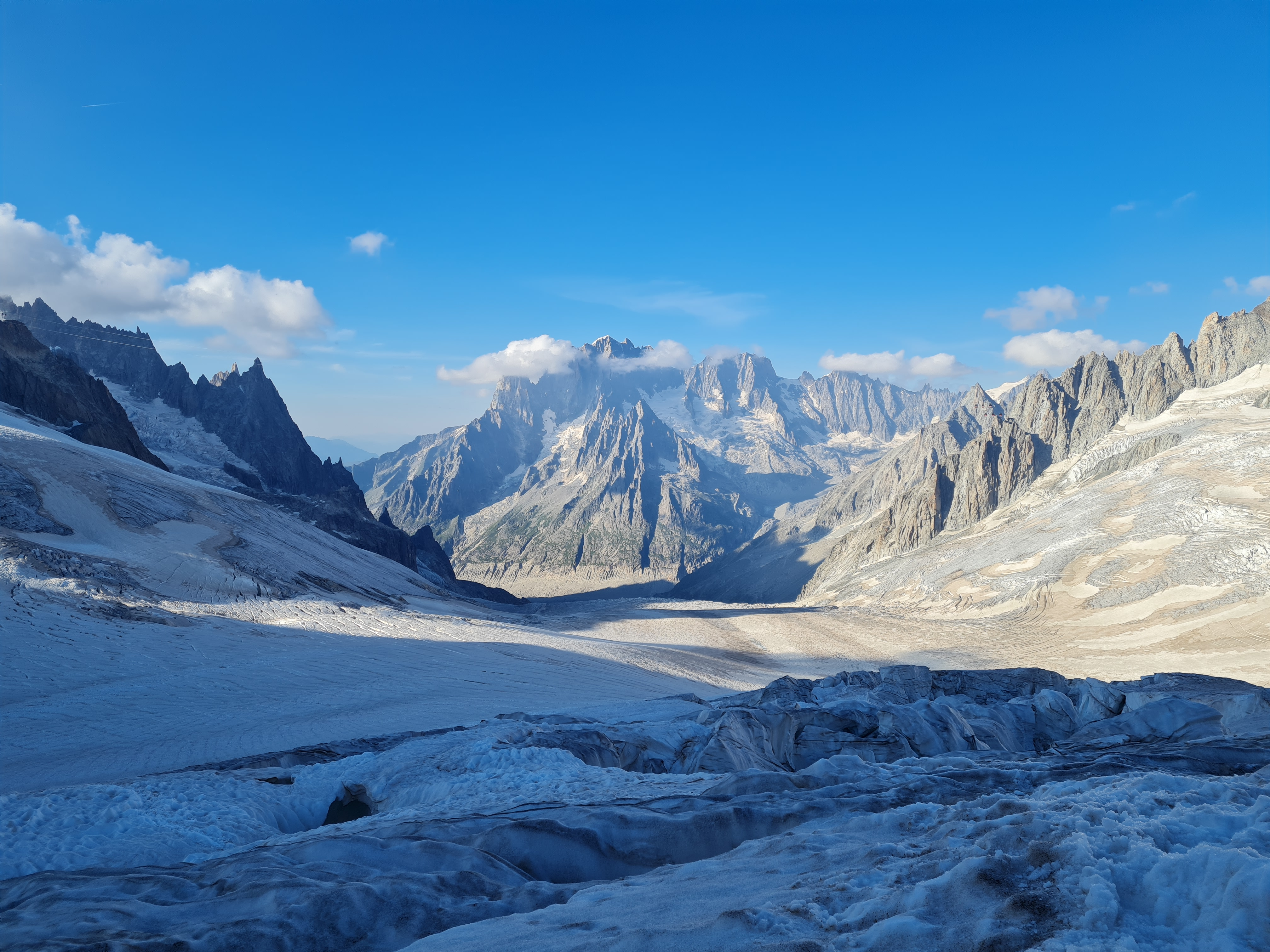
In the end, there was no question; we were going for it. After descending the Mont Blanc du Tacul, we climbed a steep snow face. Unfortunately, the soft snow, coupled with the steep incline, made it challenging. Our way back down later in the day presented even more difficulties. Descending through the normal route was not an option due to the risk of falling rocks in the Grand Couloir after the Gouter Hut. Carefully, under a massive serac, we stepped our way through the steep Mont Maudit wall, occasionally sinking up to our knees in the soft, deep snow. The snow had a yellowish hue due to Saharan sand, causing it to melt even faster and making it easier to sink. The Mont Blanc ascent lay ahead of us.
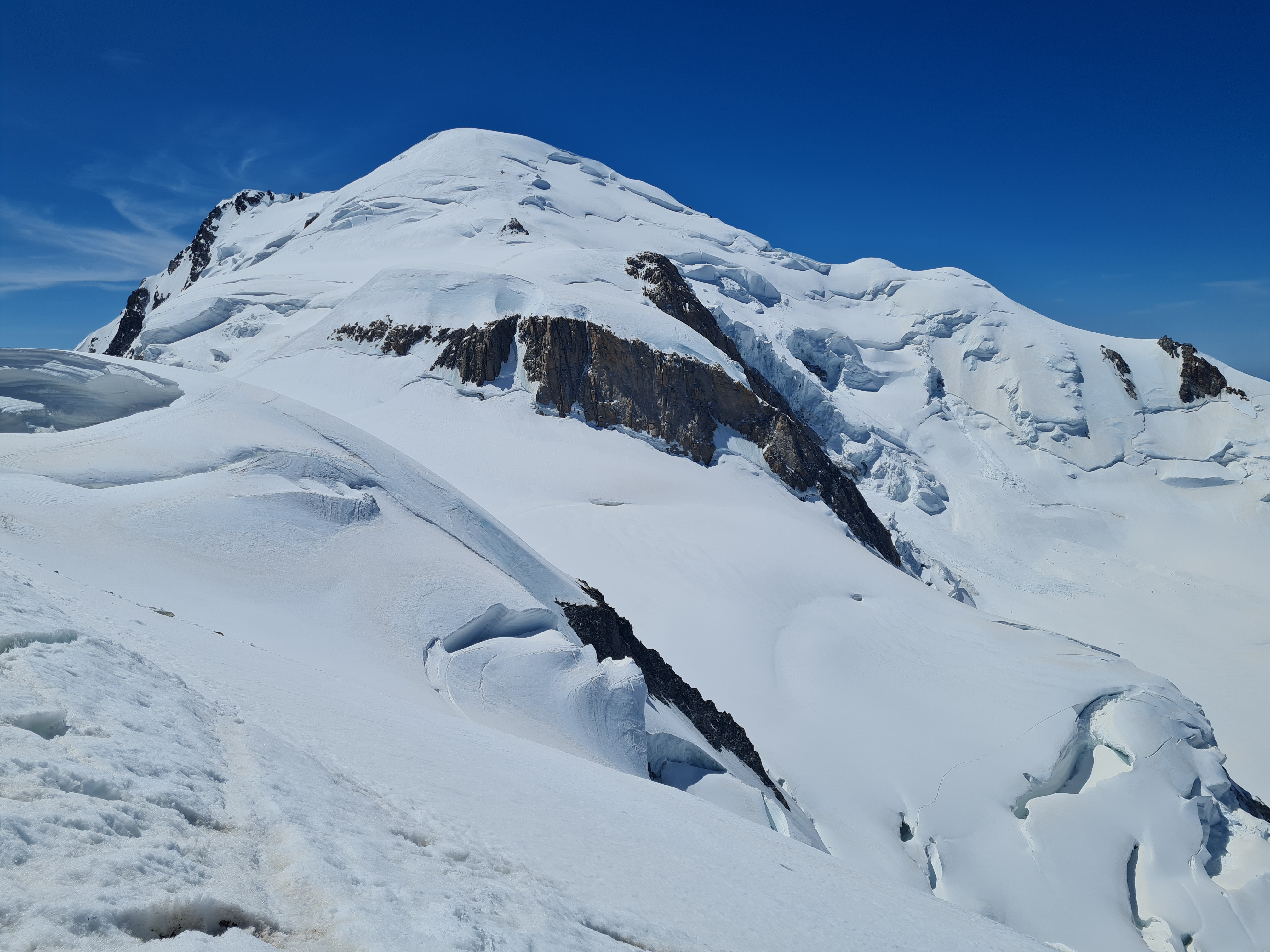
First the route goes back down to a col. Before you get here you have already overcome the necessary crevasses. It remains extremely tricky because the walls of the muscles can collapse at any moment. We take a short break at the col. A very small sip of water to soothe the very dry throat and then one of the last energy bars in it. The pace has now slowed considerably. Is it the altitude or the dehydration? We know from research that one percent moisture loss equals 20% performance loss. We decide to leave the backpack on a flat area. After all, we will come back here again. This saves the weight of an extra rope, all the rock climbing equipment, extra climbing shoes, etc. We only take the bare essentials with us. The last water, an extra jacket, pickle, ski pole, etc. It seems like you can see the top. But I know from experience that it is a snow dome that just keeps rising. With an eye on infinity and a steady pace, we force ourselves not to give up. Bart briefly asks whether it is not an option to sleep in the Cosmique hut (France) instead of the more distant Torino hut (Italy). But we know that this is not convenient the next day because the car is in Italy. First the top. Things are going really slowly now and Bart indicates that he is suffering from the altitude. But at the same time he shouts: we’re going to get him! It is now 1:00 PM, but we want to be at the top by 2:00 PM. The last part is a zigzag uphill that seems to have no end. Every time you think there will be 3 more hairpin bends and then we will finally be at the top. But appearances are deceiving. It has now started to blow a bit and the wind is very cold. We put on an extra coat. Fortunately the snow/firn is hard here.
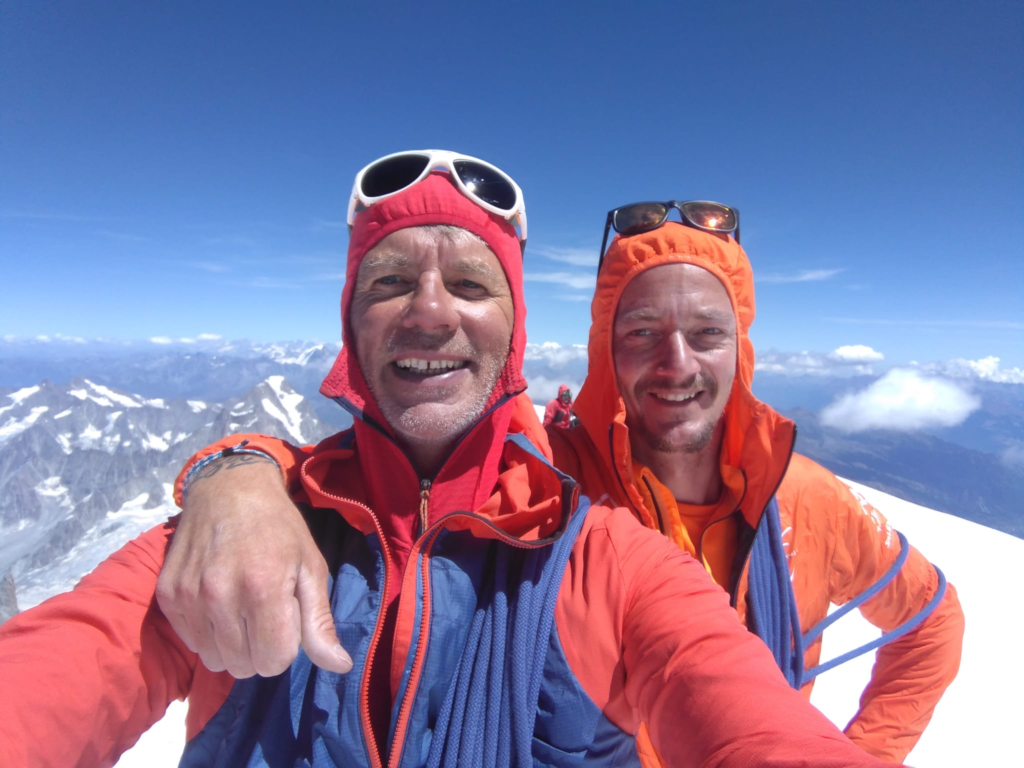
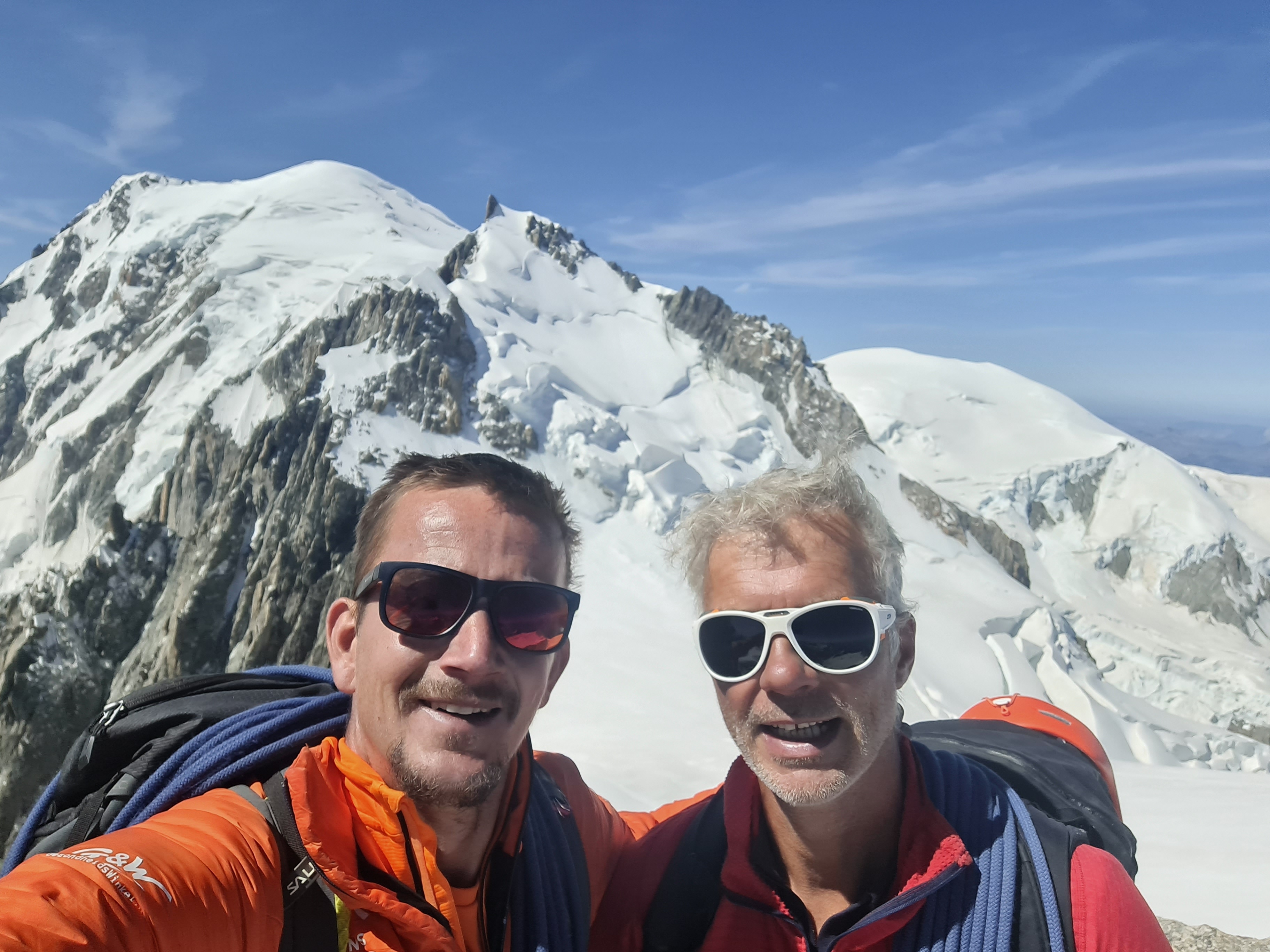
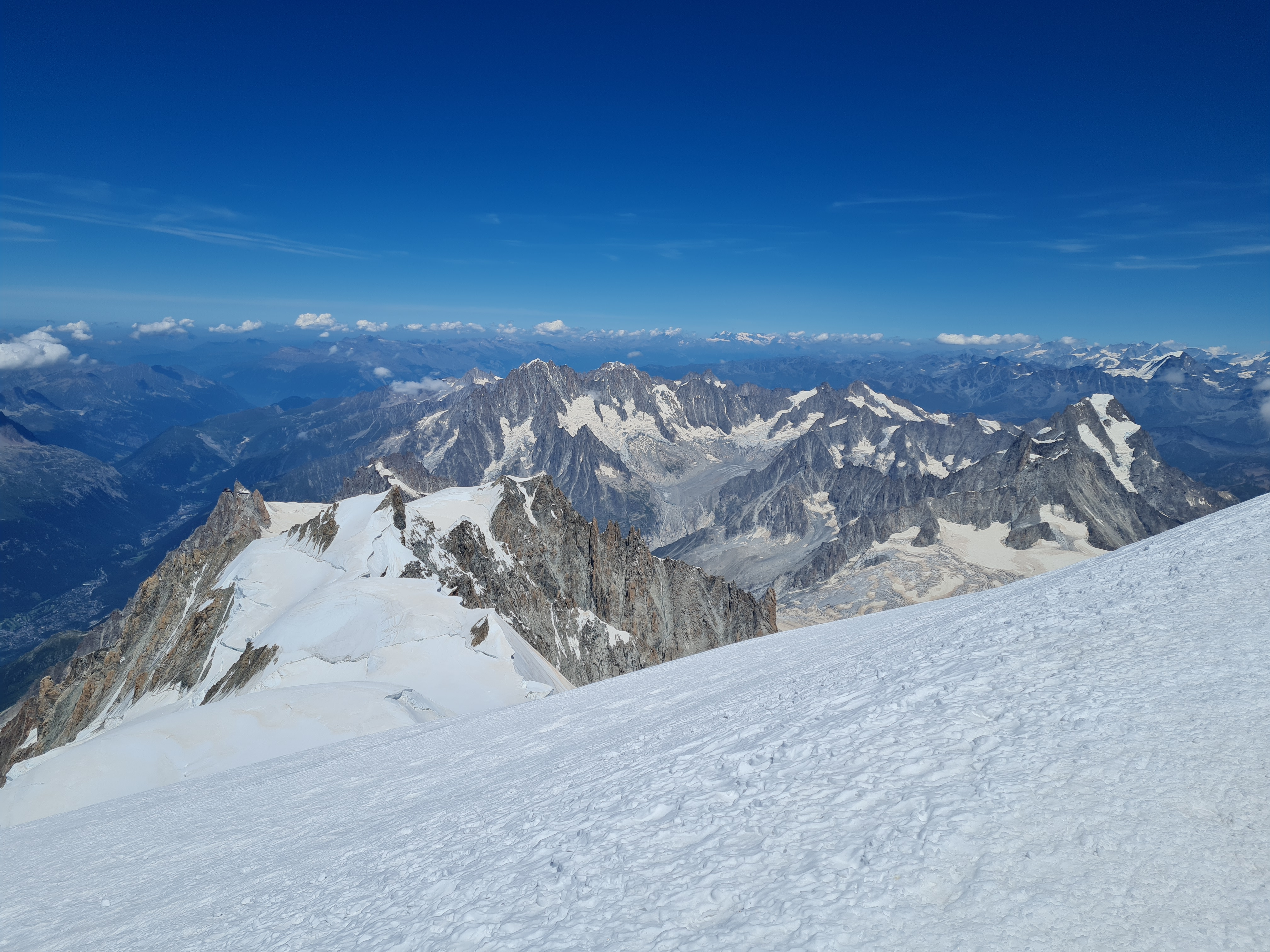
And finally, with a lot of pushing, we reach the dreamed-of top of Mont Blanc (4807m), the roof of Europe (actually western Europe) at 2 p.m. The highlight of To the Top for Kika has been achieved. Bart and I fall into each other’s arms, almost crying. I film Bart and Bart shouts over the wind that he can hardly talk anymore. On the one hand because of the dry mouth, but even more because of the emotion. Bart thanks me and I pat him on the shoulders and compliment him. Nicely done man! It worked, who could have imagined that? After all, Mont Blanc is officially closed to climbers. That makes it extra special. Because of the cold wind and the long return journey ahead of us, we stay at the top for a short time. The view is magical. We record everything and descend again.
A Testing Descent and Pushing the Limits
They sometimes say descending comes naturally, but not in these circumstances. One misstep and you will slide down and there is a good chance that you will pull the other person along with the rope. The very steep parts in particular are exhausting. Keeping your head down is the credo. A little lower down near the backpacks we take another short break of 5 minutes. The last strip goes in and one of the last sips. Bart asks if eating snow isn’t a solution. I explain to him that snow contains no minerals and/or salts that are of any use to your body. In fact, when you eat snow you lose energy because your body has to melt the ice and you only dehydrate further. The thirst goes away for a moment, but comes back more and more quickly. The next goal is to descend the steep wall of Mont Maudit again. You first have to go back up after the col before you can start here. And it won’t be the last climb. Even after Mont Maudit, you have to go up again after a descent to cross Mont Blanc du Tacul again. This is followed by a steep, long, mushy descent to the glacier of the Vallee Blanche. You then reach the glacier between and under all kinds of fallen ice towers and seracs, jumping over glacier crevices. Then there is a long detour to finally arrive at the Torino hut on the Italian side. You first pass the Cosmique hut on the French side where Bart suggests having a drink. But I talk him out of it because you first have to climb a few hundred meters up from the glacier. And I motivate him that we can find water on the glacier. The boss of the Torino hut told us that you would be back at the Torino hut in 2 hours over the glacier. But when, after an hour of difficult walking and sinking, we arrive at the corner of the glacier towards the hut, our courage sinks because we will first have to descend quite a bit before having to climb a long way up to the hut. By the way, you can’t see that hut. I’m guessing we’ll need at least another 2 hours. It is now 6:00 PM. At the edge of the glacier, Bart hears water splashing off the rocks. We take a D-tour and find the waterfall where Bart fills our water bottles. We quench our thirst with the stone-cold water. It helps for a moment. We continue our way. We had dreamed for a while that we would be able to catch the cable car from the hut back to the valley at 5:30 PM. Let’s hope that we can get a bed soon and hopefully something to eat.
As we round the corner of the glacier downwards we suddenly find ourselves in front of a gigantic fault zone with gigantic glacial crevasses. There seems to be no way through. Theoretically there are two options. Or through the middle where the glacier is relatively flat or on the side near the rocks, but there it is quite steep. Walking to the center would be quite a hassle and take a lot of time. We decide to take a chance and find a way through the labyrinth full of mouth-sized glacier snowcaps. I lead the way and remind Bart to keep the rope tight. Falling into a crevasse now would be disastrous. So tired and at the end of your strength and then trying to get out is a horror scenario. But we manage to find our way through the labyrinth. When we arrive, after another hour of walking, half-sliding, on the other side of the Glacier on the Italian side, we still have a long climb to the hut. It really seems very far, no hut to see and no track to follow. We choose a longer path, but one that goes up less steeply. The first part goes well, but then near the hut we enter a labyrinth of mega-large glacier crevasses. Fortunately there is a trail and we trust that it will take us to the hut. But then suddenly we are standing in front of yet another crevasse that you normally cross or jump, but this one is so big that it looks as if a piece of ice has fallen away. The route seems to continue on the other side. We look at each other and see only one solution and that is to jump with a good run-up. It feels quite scary because the depth of the crack is terrifying to say the least. We gather the courage and with a run-up with pickle at the ready, I fly through the air and land just on the ice on the other side. A moment later, Bart flies through the air and a cry of relief follows. Will this be the last hurdle? The hut remains hidden behind a rock massif until the end, but we can still see the endless trail going up in front of us. And finally after 17 hours of climbing we are finally back at the hut. It is now 8:00 PM. We throw down the stuff and order 4 cans of lemonade. Fortunately, despite the crowds in the hut during the weekend, there is still a bed and some food. Tomorrow the alarm goes off at 5.45 am for the first lift down. With a fantastic Kika week and 9 x 4000+ mountains, we return home satisfied and tired. With a backpack full of life memories you will never forget. And that for a mighty cause. All’s well that ends well!
Text: Wilco van Rooijen
Conclusion: A Rewarding Summit and A Journey to Remember
We relished our incredible Kika week, having conquered nine 4,000-meter peaks. It was a rewarding and exhausting journey, filled with unforgettable memories. We couldn’t have asked for a better cause to fuel our determination. In the end, all’s well that ends well!
Collective Triumph
and Lasting Bonds
After a grueling 17-hour journey, our return to the hut marked the end of a Kika week with the conquest of nine 4,000-meter peaks. Beyond a physical feat, the climb stood as a testament to our teamwork, determination, and shared commitment to a meaningful cause. The memories forged during this alpine adventure will forever resonate as a testament to our collective spirit.
Mont Blanc,
Detail
Mont Blanc, standing at 4,807 meters, is the highest peak in the Alps and Western Europe, renowned for its challenging ascents and breathtaking panoramic views.
Get In Touch
Ready to embark on your next adventure or looking to enhance teamwork and cooperation within your organization through exhilarating experiences? Feel free to contact us. We’d love to discuss how Bart Van Bemmel’s expertise in mountaineering and extreme sports can create unforgettable journeys and valuable lessons tailored to your needs. Get in touch today to start your unique adventure or team-building experience.